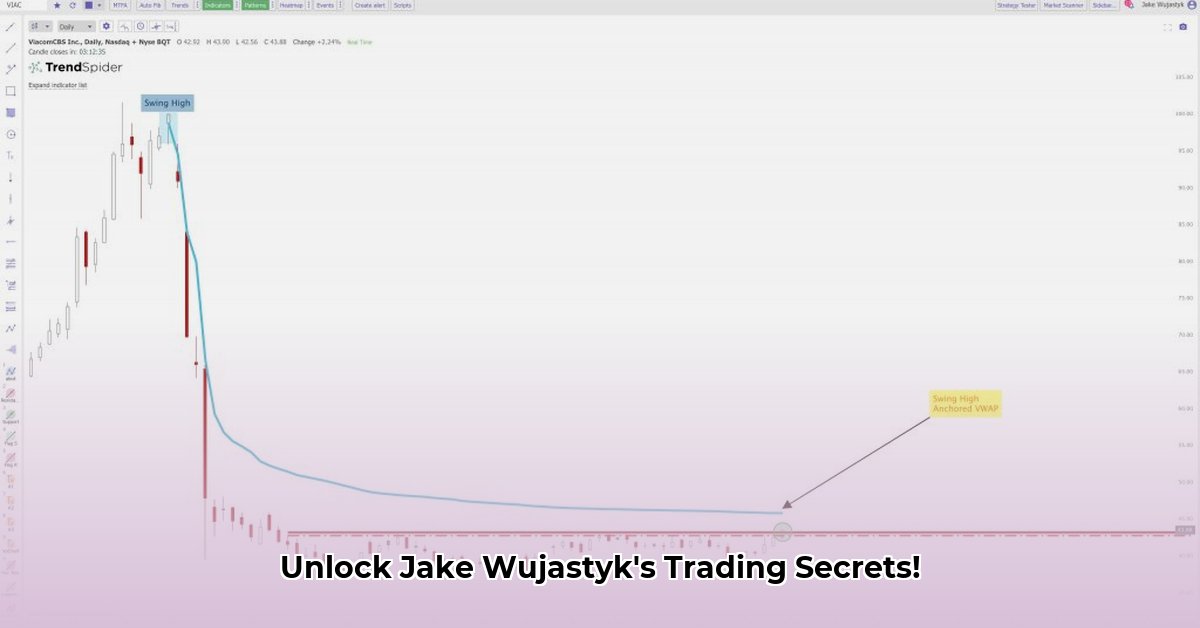
Jake Wujastyk's Technical Analysis Strategies: A Day Trader's Guide
This guide details the technical analysis strategies employed by Jake Wujastyk, focusing on actionable steps for day traders. While we cannot speculate on his net worth, understanding his approach provides valuable insights for improving trading performance. Remember, no trading strategy guarantees profit, and all trading involves risk.
Chart Pattern Recognition: Deciphering Market Signals
Wujastyk’s success hinges on identifying key chart patterns, visual indicators of potential price movements. This section outlines how to identify and interpret those patterns effectively.
Step 1: Familiarization. Begin by learning common chart patterns such as head and shoulders, flags, triangles, and double tops/bottoms. Numerous online resources provide visual aids and explanations.
Step 2: Practice. Analyze historical charts, identifying and interpreting patterns. Focus on recognizing the characteristic shapes and price movements associated with each pattern. This requires patience and consistent practice.
Step 3: Confirmation. Once you're comfortable, analyze real-time charts. Identify potential patterns, but always seek confirmation from other indicators before making trading decisions.
Volume Analysis: Confirming Price Trends
Volume, the number of shares traded, provides crucial context to price movements. High volume confirms a trend’s strength, while low volume suggests weakness and potential reversals.
Step 1: Integrated Analysis. Analyze price and volume concurrently. A significant price increase with high volume is a stronger signal than one with low volume.
Step 2: Identifying Divergence. Look for discrepancies between price and volume. Rising prices with declining volume may indicate weakening momentum and a potential price drop.
Macroeconomic Factor Integration: The Broader Context
Ignoring macroeconomic factors is a critical mistake. Wujastyk implicitly uses macroeconomic data in analyzing market trends. This requires staying informed about significant economic news.
Step 1: News Awareness. Keep abreast of important economic announcements (e.g., Federal Reserve statements, GDP reports). Understand how these events might influence market sentiment and price movements.
Step 2: Anticipating Impact. Try to predict market reactions to these announcements. This is challenging, but even a general understanding can significantly improve your decision-making. Consider how different asset classes might react differently.
Risk Management: Protecting Your Capital
A crucial element missing from publicly available information about Wujastyk's methods is a detailed risk management strategy. This omission needs to be addressed.
Step 1: Position Sizing. Never risk more than a small percentage (2-5%) of your capital on a single trade. Accurately calculate your position size based on your risk tolerance and the trade's potential outcome.
Step 2: Stop-Loss Orders. Set stop-loss orders to automatically sell a position if it moves against you by a predetermined amount. This limits potential losses and protects your capital.
Step 3: Diversification. Spread your investments across various assets to mitigate risk. Don't concentrate your capital in a single stock or sector.
Backtesting and Validation: Proof of Concept
Before using any strategy with real money, backtest it using historical data. This simulates past trades to evaluate your strategy's performance.
Step 1: Data Acquisition. Obtain historical price and volume data for the assets you plan to trade.
Step 2: Strategy Implementation. Apply your trading strategy (combining chart patterns, volume, and macroeconomic factors) to the historical data.
Step 3: Performance Analysis. Analyze the results. Identify areas for improvement to refine your strategy.
Conclusion: The Path to Successful Day Trading
Mastering Wujastyk's technical analysis approach, combined with robust risk management, significantly enhances your day trading strategy. Continuous learning and adaptation are essential for long-term success in this dynamic market. Remember responsible trading practices are paramount.